My cancer has a name, a stage and a mutation. The mutation is the part that should scare you. I have rectal cancer, stage IV, KRAS A146T mutation. Most people will look at stage IV with terrified eyes. But it is the eight characters after that which decides what happens. This mutation of mine, came with a special designation that was used by my oncologist - UNDRUGGABLE.
Undruggable doesn’t mean it’s not curable, it’s something worse and weirder. Doctors know exactly what is broken - they just don’t know how to fix it. All of us are made of cells. Each cell has switches that tell it when to grow and when to stop. In a normal cell, those switches work as they should. Mine does not. My switch falls in the KRAS group and it is stuck in ‘ON’ state, which means my cells never stop dividing and growing. For 40 years scientists worked hard on fixing these broken switches. The first drug that worked, Sotorasib was approved in 2021 and it only works on KRAS G12C - a mutation shared by 4% of colorectal patients. 96% of us are still waiting for our fixes.
It’s not just me, there are many others like me. For example pancreatic cancer patients where survival rates have not improved in decades, or Diffuse Intrinsic Pontine Glioma (DIPG) a paediatric brain cancer where five year survival rate is 1%. These folks share the hospital floor and waitlist with me.
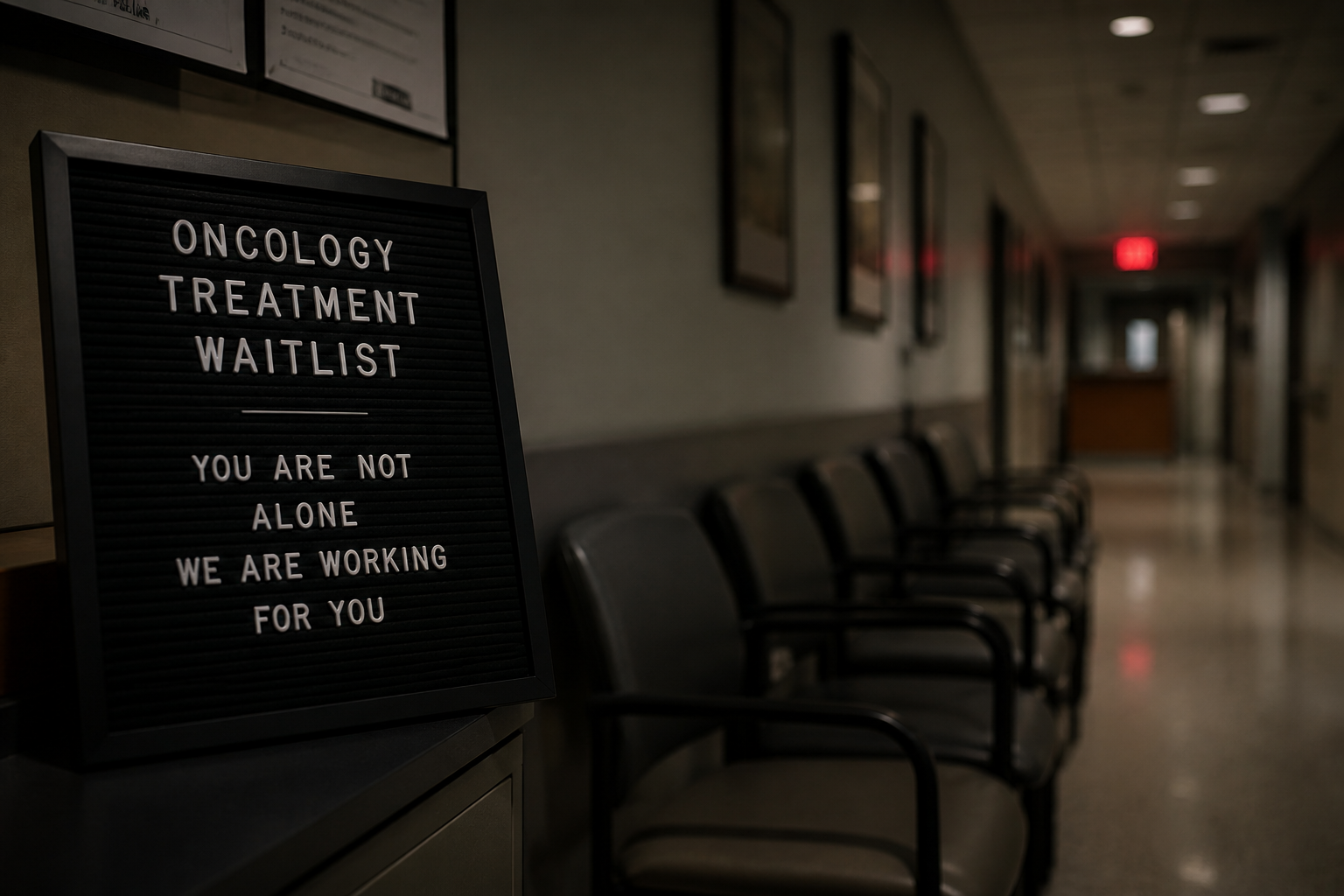
Sitting in hospital rooms, you begin to understand the value of cancer research. Every chemotherapy, every targeted therapy, every immunotherapy that exists today was once somebody’s long-shot research project. Cancer research happens in three phases.
Phase 1: this might work, it might not, but it’s worth a try.
Phase 2: it’s working in the lab, let’s prove it works in patients.
Phase 3: it works in people, let’s make it a drug and sell it.
Federal grants fund Phase 2. Big pharma funds Phase 3. Phase 1 — the hunches, the long shots, the experiments that everything else gets built on — runs almost entirely on philanthropy. On donor money. On people who decided their dollars should pay for someone’s “this might work, it might not.”
And that’s why I’m fundraising for the Jimmy Fund. Because for patients like me, the next option doesn’t come from what already exists. It comes from what someone is willing to fund before it’s proven. The Jimmy Fund has been raising money for Dana-Farber Cancer Institute since 1948. In 2019, Dana-Farber opened the Young-Onset Colorectal Cancer Center — one of the first programs in the country built specifically for patients diagnosed with colorectal cancer before fifty. People like me. Dana-Farber is ranked the #1 hospital for cancer care in New England, #3 in the country, and holds a four-star Charity Navigator rating. This is where Phase 1 money goes. This is where the long shots get funded.
I’m raising $10,000 for the Jimmy Fund by September 18 2026. If you have it to give, the link is at end of the article. If you can’t give, share this. Forward it to one person. Post it once. Your network includes someone who’s been waiting for a reason to donate, and this might be it.
Sotorasib was a long shot in 2013. The drug that fixes my mutation is a long shot right now. Long shots need money. Mine, yours, whoever’s reading this — that’s where the next drug comes from.
Donation Link: https://bit.ly/3P4bLb8